
Foot and Mouth Disease Restrictions Tighten in Windhoek |
FMD livestock restrictions and the meat movement ban remain firmly in place until further notice |
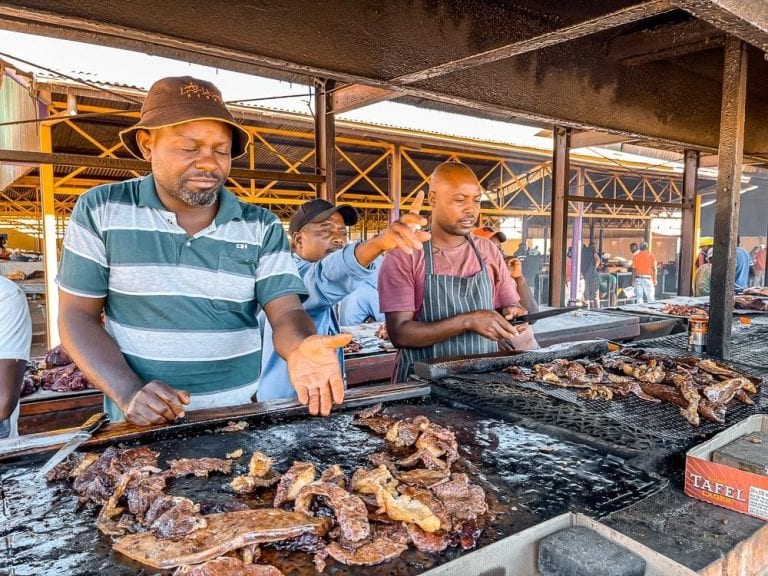
The streets around Single Quarters, Wanaheda, Greenwell Matongo, and Okuryangava - once thick with the smoke and sizzle of kapana grills - have grown eerily quiet.
Foot and mouth disease has arrived with a force that Namibia has not faced in its primary commercial livestock zone in six decades, and the ripple effects are being felt hardest on the ground in Windhoek.
The outbreak, confirmed in the Karasburg State Veterinary District in the south of the country, has shaken an industry that many Windhoek households depend on for daily income and affordable meals.
Windhoek's municipal authorities have moved swiftly, suspending the issuance of meat movement permits and banning all livestock slaughtering at informal markets with immediate effect and until further notice.
The measures were reaffirmed at a recent Ordinary Council Meeting, where city leadership made clear that no relaxation of controls is imminent - and that compliance from residents, farmers, and traders is not optional.
Farm and homestead slaughtering for commercial sale is also off the table, and meat from animals slaughtered for home use cannot be transported off the premises under any circumstances.
Even social gatherings are not exempt - anyone wishing to slaughter for an event must obtain prior approval from the City of Windhoek and comply with strict prescribed conditions before proceeding.
Residents transporting any meat products into the city are required to carry proof of purchase or documented proof of origin at all times.
For the kapana trade - one of Windhoek's most visible and beloved informal industries - the financial toll is mounting with every passing day.
Braai stands and blackpot setups that once occupied nearly every corner of the capital now stand largely idle, a stark symbol of how broadly this disease is reshaping daily economic life in the city.
The virus breached Namibia's veterinary cordon fence - a critical barrier separating the endemic northern region from the south - spreading into territory that had been officially disease-free since 1964.
Lab results from the Central Veterinary Laboratory confirmed the outbreak after samples were rushed in for analysis, with ten of eleven returning positive.
The consequences extend well beyond Windhoek's informal sector.
Namibia's red meat industry - a cornerstone of the national economy and a major source of foreign exchange - has been severely disrupted, with international markets moving to suspend imports of Namibian beef and related products.
Officials have urged all livestock owners to immediately report any suspected FMD signs to the nearest state veterinarian and to urgently reinforce biosecurity measures on farms and homesteads.
The full scale of the economic damage is still unfolding, but what is clear is that FMD livestock restrictions and the meat movement ban will remain a defining feature of life in Windhoek for the foreseeable future. |
25 Comments
Join the conversation
biosecurity on farms should have been tighter before this happened. Closing the gate after the cattle are out
really hoping the vendors can get back on their feet soon. Affordable food options in those areas matter a lot to people who live there
the Central Veterinary Laboratory must be under enormous pressure right now. Respect to those people working fast on this
some people will try to smuggle meat and ignore the rules. Hope they are actually checking and not just making announcements
proof of origin for meat you bring into the city. That is actually a smart measure. Easy to enforce at checkpoints too
at least the city is enforcing it properly. I was worried they would be slow to act but sounds like they moved quickly
the red meat industry is a huge source of foreign exchange. This could have effects on the economy for a long time
my question is how long is foreseeable future. Weeks? Months? People need a clearer timeline
the blackpot ladies near my office have been there every day for like 8 years. Not seeing them is just wrong
I support the ban fully. FMD spreads fast and the last thing we need is people moving infected meat around the city
no relaxation of controls imminent. Those are not encouraging words for anyone trying to plan their income right now
farmers in Karasburg must be in serious trouble right now. The article focuses on Windhoek but the source of the outbreak is where the real pain is
1964 was the last time this happened in the south. My grandmother used to talk about that. Never thought we would see it again
Greenwell Matongo without kapana smoke is honestly hard to imagine. That smell is part of the neighbourhood
the kapana trade feeds so many families. The government needs to step in with some emergency relief for these vendors
people need to actually carry proof of purchase when transporting meat now. Most people have no idea this rule exists
international markets suspending Namibian beef imports is the part that really worries me. That affects the whole country not just Windhoek
I drove past Okuryangava yesterday and it was so quiet. Those grills are always going. Really strange to see
the cordon fence was supposed to prevent exactly this. Someone needs to answer for how this happened
so if I slaughter for a funeral I need city approval first? Who even knew that was the rule now
ten out of eleven samples positive. That is a bad number. The outbreak must be pretty widespread already
glad the city acted fast but those stands being empty is painful to see. That kapana culture is a big part of Windhoek
my cousin sells kapana in Wanaheda. She has three kids and no income right now. This is really serious
60 years without FMD in the south and now this. How did it even get through the cordon fence
this is so sad. The kapana guys at Single Quarters have been there for years. Hope they get some kind of support