Poor Waste Management and Wildlife Encroachment in Windhoek |
How baboons in residential areas highlight the growing risks of urban wildlife intrusion |
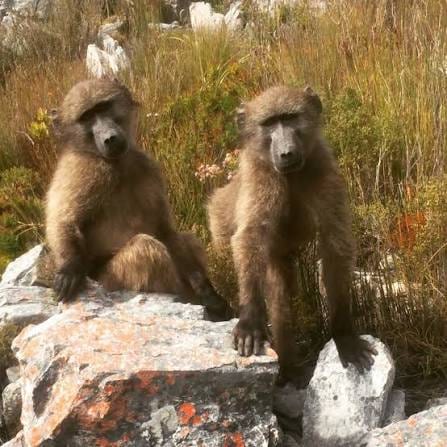
Something unexpected has been raiding shacks and stealing food in Windhoek's informal settlements - and it walks on four legs.
The growing intrusion of baboons in residential areas across the city has moved from a wildlife curiosity to a genuine public safety alarm, with national leadership now treating it as a direct consequence of poor waste management.
What was once a distant concern has arrived at the doorstep of communities like Goreangab and Havana, where residents have reported baboons raiding homes, destroying belongings, and making off with food.
The issue gained high-level attention when the National Cleanup Namibia Campaign was relaunched during a World Cleanup Day commemoration, with the country's top leadership sounding the alarm on wildlife urban encroachment as an underreported consequence of careless waste disposal.
The message was stark: when food waste is left exposed in open spaces and around households, it removes the boundary between the wild and the domestic.
Officials warned that once baboons learn to associate human settlements with reliable food sources, their behaviour shifts - and the risk to children, the elderly, and other vulnerable residents escalates sharply.
In Goreangab, the situation had already reached a tipping point before this latest campaign, with environment ministry officials having previously intervened to cull several baboons following years of reported attacks and home invasions that residents say authorities had been too slow to address.
Culling, however, is not a sustainable answer - and officials have acknowledged that the root cause lies not in the animals' behaviour but in the human habits enabling it.
The Ministry of Environment, Forestry and Tourism has consistently linked baboon encroachment to irresponsible waste disposal, urging communities to take collective ownership of how rubbish is managed at a neighbourhood level.
The relaunched cleanup campaign sets out three clear priorities: building public awareness around responsible disposal, mobilising communities for coordinated clean-up actions, and driving the kind of behavioural change that legislation alone cannot enforce.
Windhoek's slide from one of Africa's cleanest cities to losing that distinction - overtaken by Kigali in 2016 - remains a painful benchmark that officials are using to sharpen the sense of urgency.
Beyond the baboon threat, uncollected and poorly managed waste carries compounding risks: disease, contaminated water sources, pressure on public health systems, and damage to the city's tourism and environmental image.
Namibians are also being challenged to rethink their relationship with waste entirely - not as something to discard, but as a potential economic resource through recycling and upcycling enterprise.
The city's waste buy-back programme has been held up as a working model of how recyclable materials can generate income while simultaneously cleaning communities.
Residents, businesses, schools, and municipalities have all been called to share responsibility - because, as the renewed campaign makes plain, a clean and safe Windhoek cannot be built by government action alone. |
12 Comments
Join the conversation
recycling can make you money AND keep baboons away. Sounds like a win but people still wont do it smh
i live near havana and the amount of open rubbish pits around here is unreal. Baboons are the least of what comes out of them
children and elderly people are most at risk and we are here talking about awareness campaigns. We need action not words
this is a waste management problem not a wildlife problem. Glad someone in government finally said it out loud
baboons are smart animals once they know food is there they will keep coming back. Its really that simple
the buy back programme actually works i sold recyclables last month. More people just need to know about it
good luck getting people to stop dumping when there are not enough bins in the informal settlements to begin with
honestly losing the cleanest city title to Kigali in 2016 should have been a wake up call. We waited almost a decade
my kids cant even play outside in the afternoon anymore. Goreangab has been dealing with this long before the cleanup campaign noticed us
the cull was not the answer i said it at the time. You remove 5 baboons and 10 more come because the rubbish is still there
we been saying this for years and nobody listened now its a national campaign ok cool
these baboons are no joke man they came into my cousin's place in Havana and took everything from the kitchen